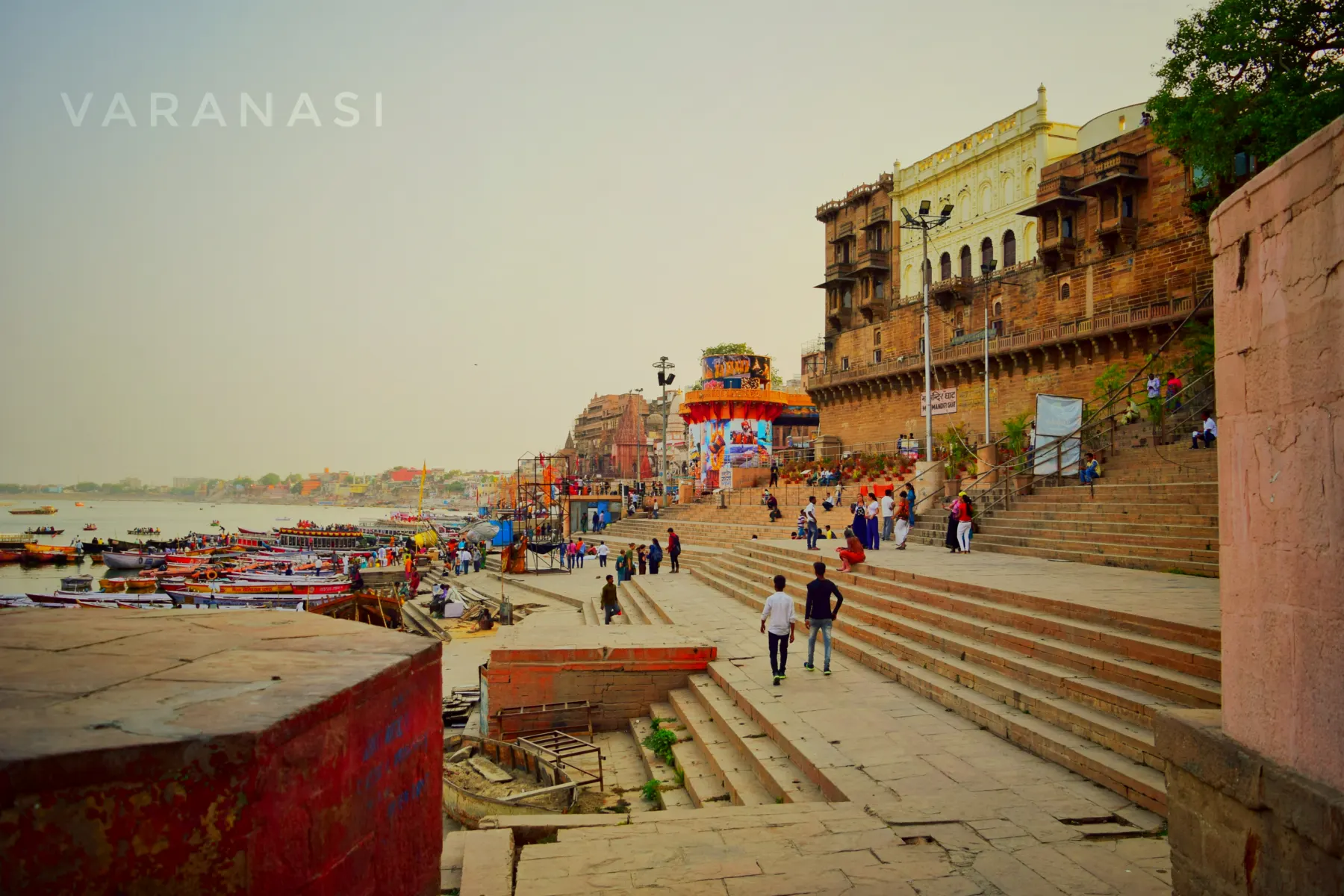
காட்களில் மோசடியாளர்களிடம் எச்சரிக்கை. கங்கை காட்களிலும் கோயில் தெருக்களிலும் தங்களை “வழிகாட்டி” அல்லது “பூசாரி” என்று சொல்லிக்கொள்ளும் தரகர்கள் VIP தரிசனம், பூஜை, படகு சவாரி அல்லது “தகனக் கட்டைக்கான நன்கொடை” என்று கேட்டு அலைகிறார்கள். யாருக்கும் முன்பணம் கொடுக்காதீர்கள்; சேவையைப் பெறுவதற்கு முன் பணம் செலுத்தாதீர்கள். கோயில் சேவைகளை அதிகாரப்பூர்வ அறக்கட்டளை மூலம் மட்டுமே பதிவு செய்யுங்கள்.
Route: Assi to Manikarnika
Walking south to north keeps the river on your right and ends near the temple. About 4 km at an easy pace, plus stops.
-
Start
Assi Ghat
The southernmost major ghat, where the Assi river meets the Ganga. Subah-e-Banaras at dawn; a lively evening aarti; cafés and bookshops above.
-
~5 min
Tulsi Ghat
Named after the poet-saint Tulsidas, who is believed to have written part of the Ramcharitmanas here. Home of the Nag Nathaiya festival.
-
~15 min
Chet Singh Ghat
A fortified 18th-century palace front, scene of a famous battle between Raja Chet Singh and the British.
-
~25 min
Harishchandra Ghat
One of the two cremation ghats, associated with the truthful King Harishchandra. Walk past quietly; no photography.
-
~35 min
Kedar Ghat
Bright red-and-white striped steps and the Kedareshwar temple — the heart of South Indian Kashi.
-
~45 min
Chausatti & Rana Mahal Ghats
Quieter steps with fine architecture.
-
~55 min
Darbhanga & Munshi Ghats
The grandest façade on the river, built by the royal family of Darbhanga.
-
~1 h
Dashashwamedh Ghat
The busiest, holiest bathing ghat and home of the main evening Ganga Aarti.
-
~1 h 10
Man Mandir Ghat
Raja Man Singh’s palace, with the 18th-century Jantar Mantar observatory on its roof.
-
~1 h 20
Lalita Ghat
The river gate of the Kashi Vishwanath Dham, and the Nepali (Kathwala) temple in carved wood.
-
~1 h 30
Manikarnika Ghat
The great cremation ghat, where fires have burned continuously for centuries. Observe respectfully from a distance.
Keep going north
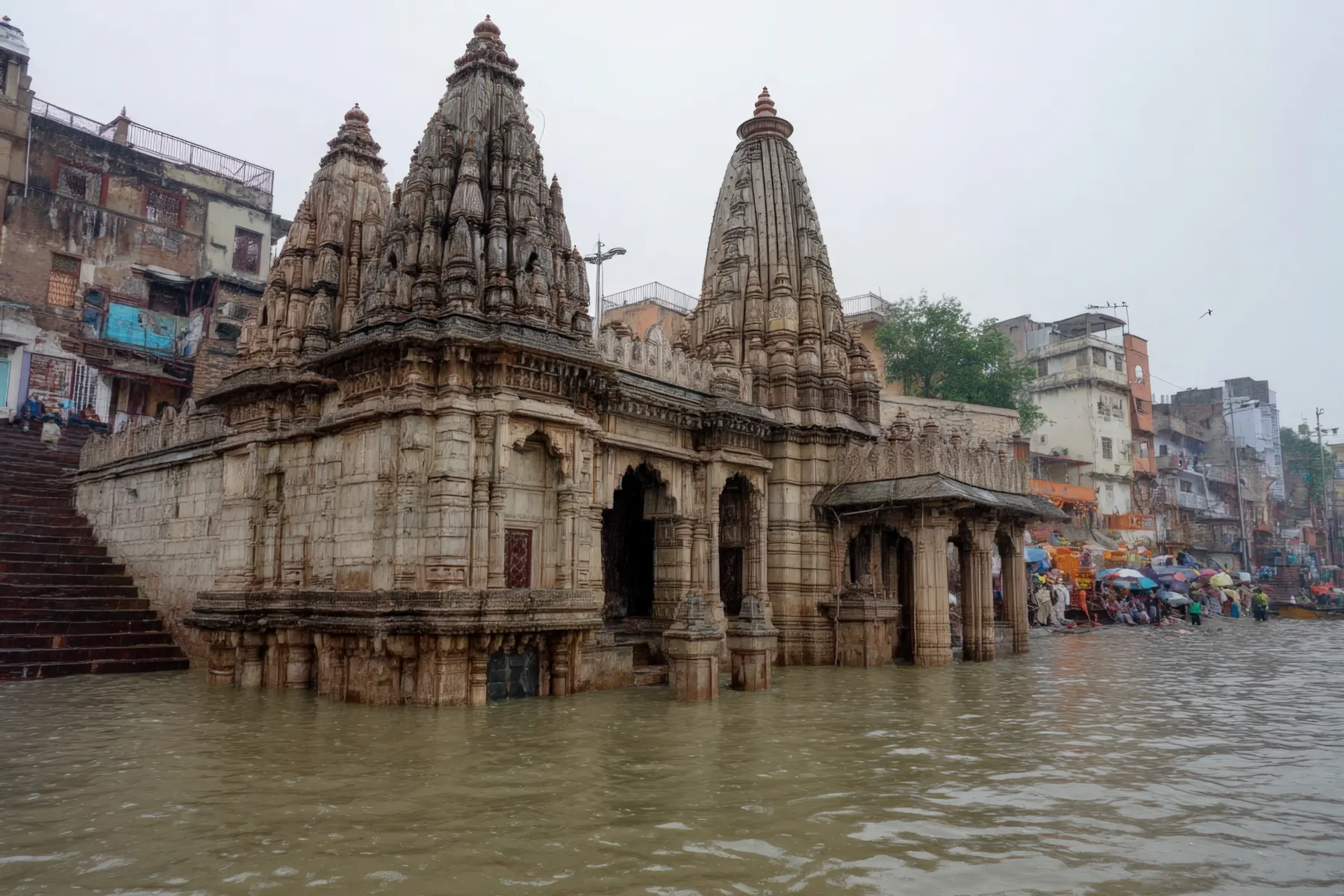
Beyond Manikarnika the crowds thin. Scindia Ghat has a half-submerged Shiva temple; Panchganga Ghat is said to be where five rivers meet, with the Alamgir mosque above; Raj Ghat and the new Namo Ghat mark the northern end near Malviya Bridge.
Etiquette at the cremation ghats
- Photography of cremations is not permitted and deeply hurtful to families.
- Stand back from the pyres and let funeral processions pass.
- Self-appointed “guides” will offer to explain and then ask for money for wood. Politely decline.
கவனிக்கவும். Steps can be slippery with water and moss, especially near the river line and in the monsoon. Wear shoes with grip and watch for cows on narrow stretches.
When the river is high
From roughly July to September, the Ganga rises and the ghats are partly or fully submerged; the continuous riverside path disappears. Walk through the lanes behind the ghats instead, and check locally before setting out.
முன்பதிவு கோரிக்கை
Walk with a local storyteller
Our licensed English-speaking guides lead 2–3 hour ghat and lane walks at dawn or late afternoon.
- ஆங்கிலம் பேசும் ஒருங்கிணைப்பாளர்
- எந்த நாட்டு தொலைபேசி எண்ணும் ஏற்கப்படும்
- விசாரிக்க கட்டணம் இல்லை